
Last updated November 22, 2026
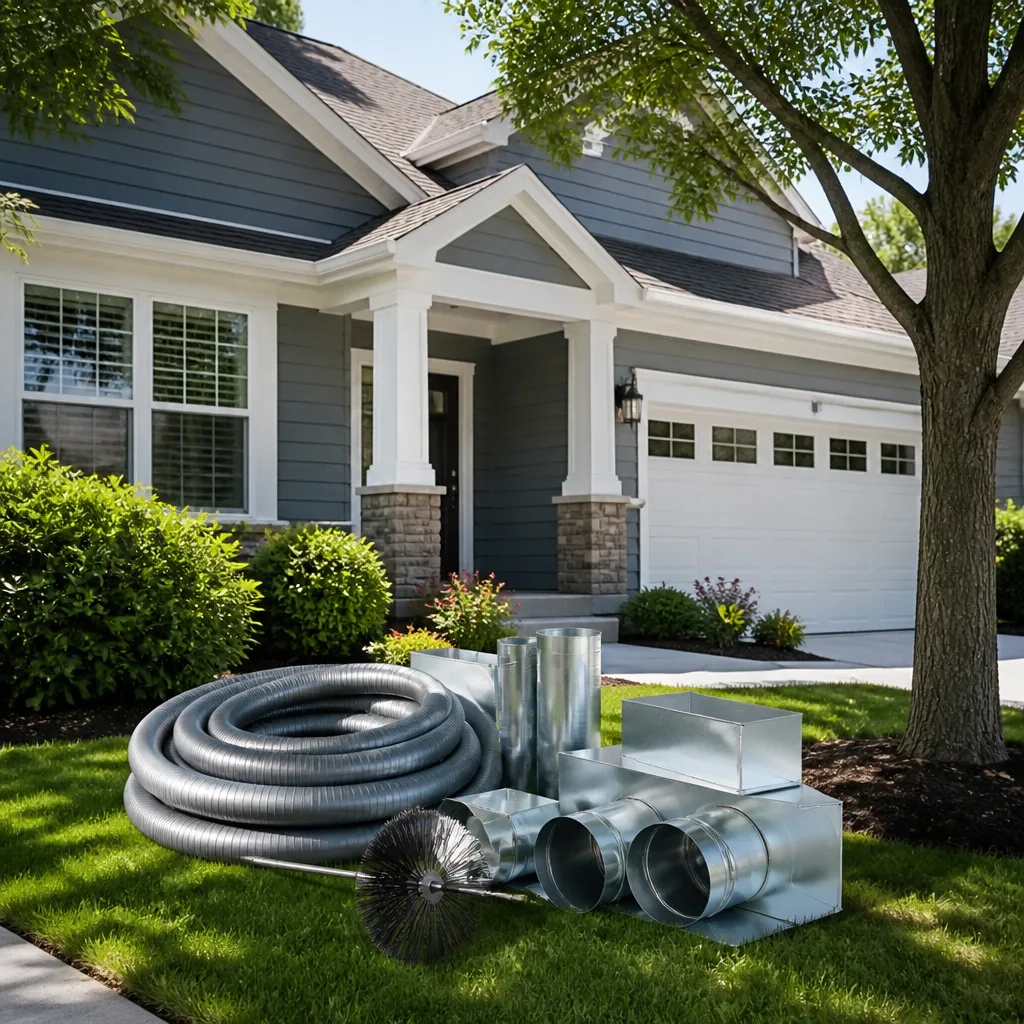 Whole-home duct cleaning
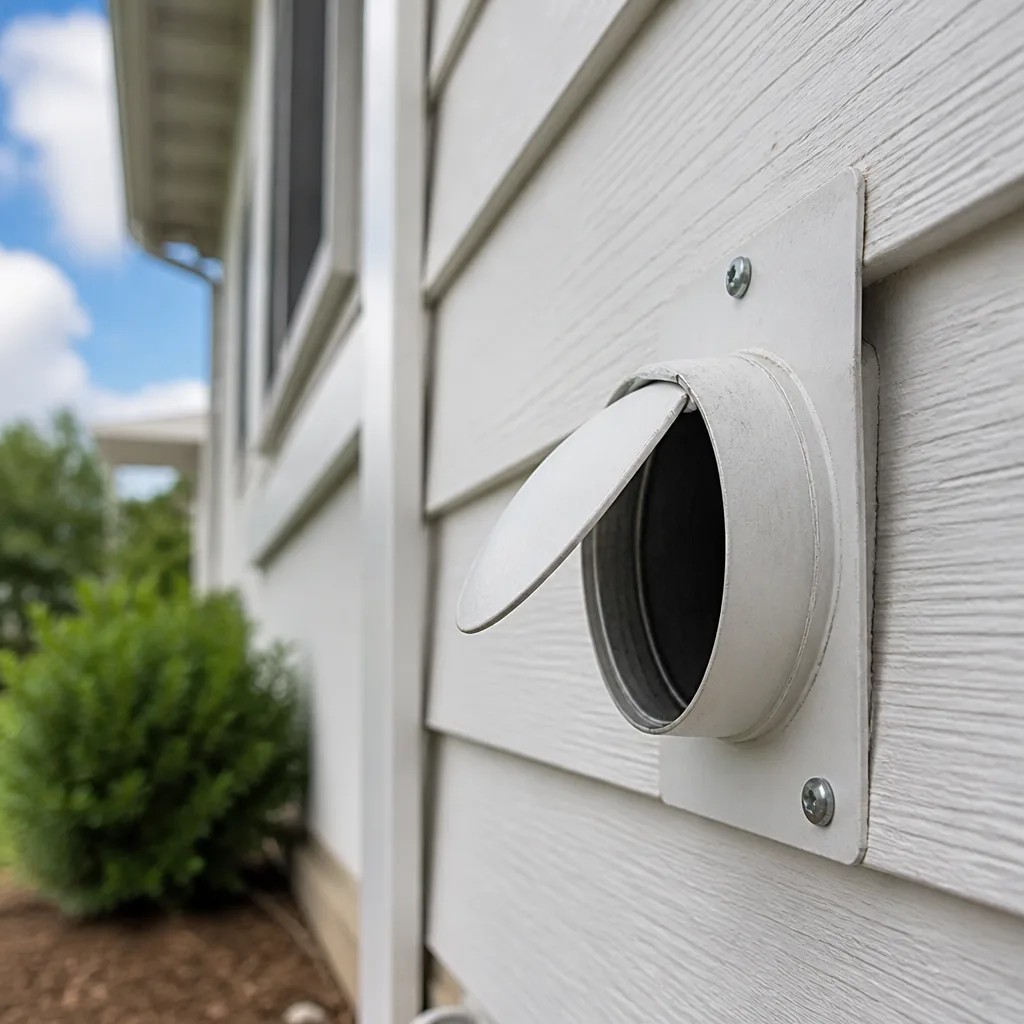 Dryer vent cleaning
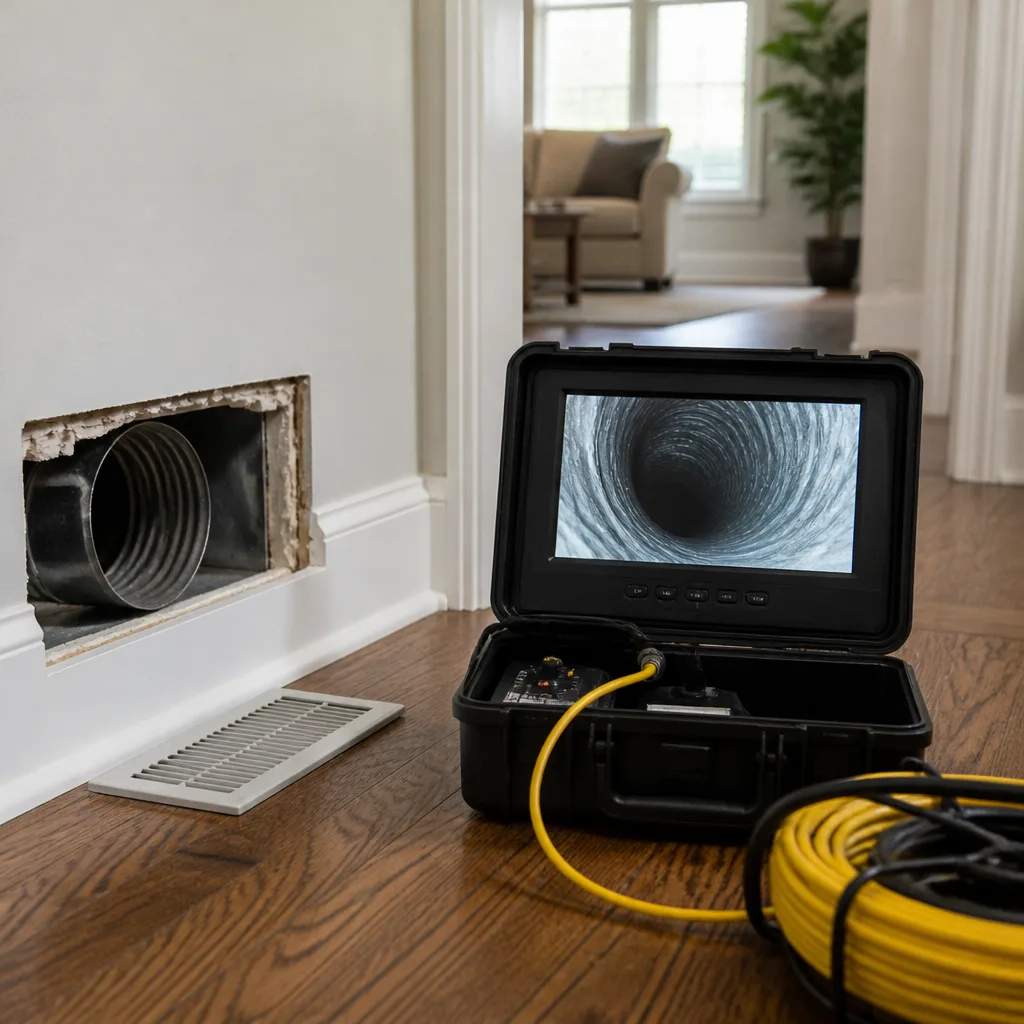 Camera inspection
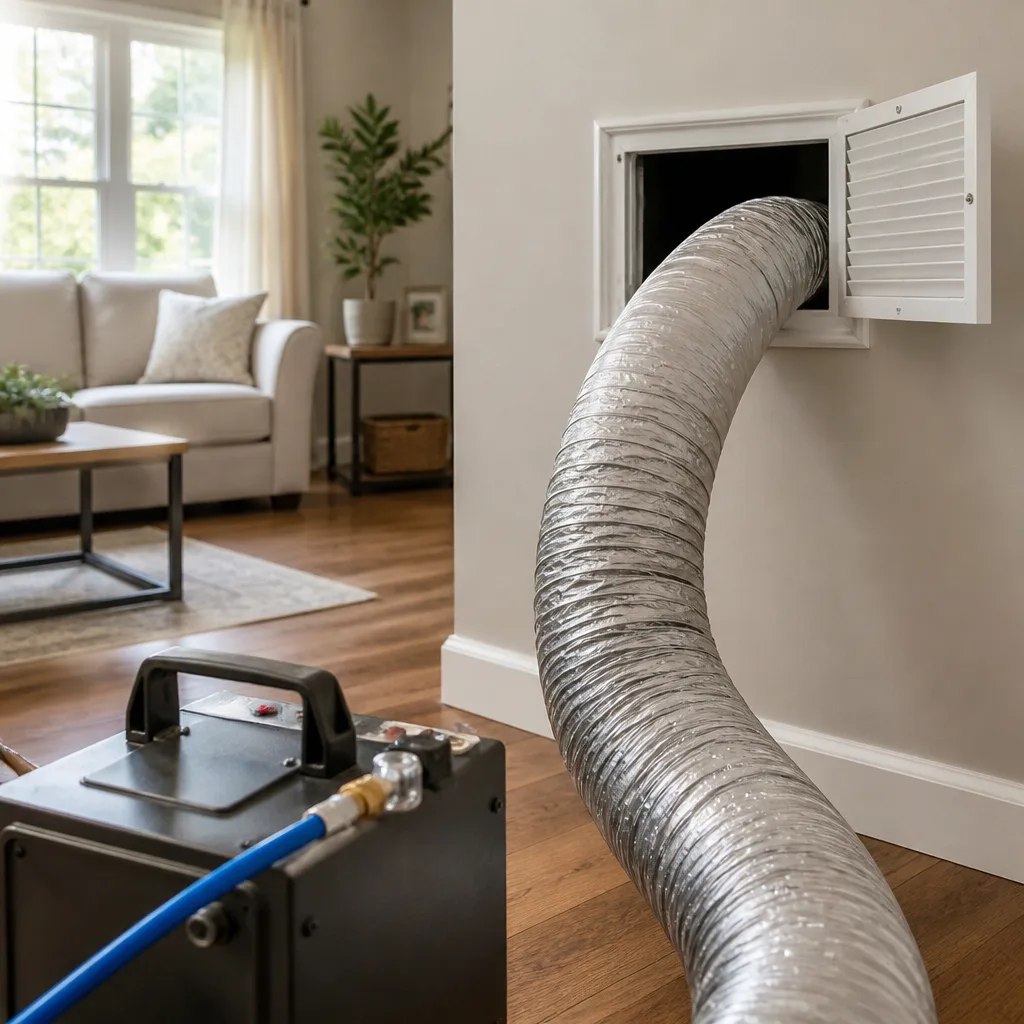 Sanitizing & deodorizing
Whole-system duct and dryer vent check with before-and-after photos - you see exactly what came out of your vents
That "$99 whole-house special" is a bait ad - the real number appears once they are in your hallway, or the "clean" is a shop-vac at the register. We photograph the inside of your ducts before and after instead.
How to Hire an Air Duct Cleaning Contractor in Antioch: A Step-by-Step Guide
Most homeowners assume that any company with a vacuum truck and a truck-mounted hose is doing the same job. They aren’t. The majority of companies marketing themselves as duct cleaners in any given metro area use equipment that doesn’t meet professional source-removal standards, which means they’re moving dust around rather than pulling it out. In flexible ductwork, the wrong brush or too much air pressure can tear the inner liner, undoing years of service life in a single visit. This guide walks through exactly what to ask before you book anyone in Antioch, how to structure the walkthrough, what contract terms to require, and how to spot a quote that couldn’t possibly cover the work.
Quick Answer
Hiring an air duct cleaning contractor in Antioch means verifying three things before anything else: the vacuum system’s airflow rating, the brush system type (contact cleaning versus air-only), and whether the team uses negative pressure containment to keep debris out of your living space. Any contractor who can’t answer these three questions clearly, or who quotes a whole-house job under $150, is not doing source-removal cleaning.
Styles & brands we work with
- Whole-home duct cleaning
- Dryer vent cleaning
- Camera inspection
- Sanitizing & deodorizing
Table of Contents
- The Three Equipment Questions to Ask Before Booking
- NADCA Certification vs. HVAC Licensing
- Red-Flag Pricing: Why $150 Whole-House Quotes Don’t Add Up
- Structuring the Walkthrough Before Work Begins
- Contract Language to Require
- What Antioch Homes Need to Know
- Dryer Vent Cleaning: The Fire-Safety Side of the Job
- When to Call a Professional
The Three Equipment Questions to Ask Before Booking
Source-removal cleaning means debris leaves your home. Everything below that standard is either agitation-only or a surface pass that doesn’t actually address the inner walls of the duct. Three questions separate credible contractors from the rest.
- What is your vacuum system’s CFM rating, and what equipment brand do you run? Source-removal work needs high-volume negative pressure to hold dust inside the system while the brush dislodges it. A Nikro professional extraction system, for example, is designed to generate and sustain that airflow. If the answer is “we have a big shop vac,” you’re not getting the airflow necessary for genuine extraction.
- What brush system do you use – contact or air-only? Contact-based cleaning means the ductwork gets physically scrubbed. Rotobrush technology uses a rotating brush head and whip that mechanically contact the interior of the run, then draw the loosened material into the vacuum. Air-only “cleaning” is a blow-through with no scrubbing action, and it’s the single biggest reason homeowners see no difference in their air quality after a visit.
- Do you use negative pressure containment during the job? Containment means your living space stays inside a controlled environment while the work happens. Remediation-grade filtration equipment, like Abatement Technologies systems, filters the air pulled from the ductwork before releasing it. Without containment, the micro-debris you’re trying to remove ends up in the air you breathe during the appointment.
Book a contractor who answers all three concretely, not vaguely. A technician trained on professional-grade equipment will have a specific answer ready. Our technicians have up to 13 years of experience and can walk through exactly which system they’re running on your home.
NADCA Certification vs. HVAC Licensing
These two credentials cover entirely different things, and plenty of homeowners conflate them. General HVAC licensing covers mechanical systems – refrigerant handling, electrical work, installation, repair. NADCA certification, offered by the National Air Duct Cleaners Association, covers air system cleaning specifically: the assessment, the cleaning standards, and the verification processes unique to ductwork.
For duct cleaning itself, NADCA certification matters more. A licensed HVAC technician without specialized duct cleaning training may understand your system’s airflow mechanics but not the cleaning protocols required to remove contaminants without damaging the duct lining. Ask for both if you can get them, but if you have to choose, the certification that directly speaks to air system cleaning is the one that matters for this job.
What to Verify
- NADCA membership or certification – the specific, air-system-focused credential
- State-issued HVAC licensing if the contractor also does mechanical work
- Liability insurance and bonding in place (ask for documentation, not a verbal yes)
- Confirmation of which technician will actually be on site and their specific training
- Whether they subcontract – you want the team that performs the work to be the team that holds the credential
Antioch homeowners should also ask whether the company can handle duct repair and sealing in-house. Cleaning without addressing gaps, disconnected joints, or deteriorating sections creates a situation where the freshly cleaned system gets contaminated again in weeks. Full-system service means cleaning and repair handled by the same operation. For more on our duct repair capability, take a look at the Antioch Air Duct Cleaning Pros home page to see all five service lines we cover.
Red-Flag Pricing: Why $150 Whole-House Quotes Don’t Add Up
A whole-house duct cleaning quote under $150 is a structural impossibility for legitimate source-removal work. Here’s the math: two to three hours of technician time, professional-grade vacuum equipment, brushes and containment supplies, plus the documentation and camera inspection that follows. The economics don’t work at that price point without cutting the things that make the service real.
In our experience, what happens next isn’t complicated. The teaser price gets the crew through the door, then a menu of add-ons appears – sanitizing, “deep cleaning,” sealing, mold treatment – each priced individually. The final invoice is many times the quoted figure. Another common version is the “per-vent” price, which charges you by the number of registers rather than the amount of actual ductwork. Since vent count has almost no relationship to the length or condition of the duct runs, per-vent pricing is a way to make an unpredictable job sound predictable.
Honest pricing in the Antioch market works the other way. You get a whole-system estimate based on what the technician actually sees – run length, accessibility, condition – and that’s the price. One flat price per system, agreed before work starts, opens the door to a scoped job. Nobody surprises you after the equipment is set up.
Pricing Signals That Tell You Something
- A quote given over the phone without seeing the system is a guess, not an estimate
- Separate “base price” and “per-vent” charges are a pricing structure, not a service
- Sanitizing priced as an upsell rather than discussed as part of the scope
- No written estimate before the crew arrives
When you work with us, we quote a single figure for the system before anything happens. Call (833) 508-9940 to schedule a free estimate.
Structuring the Walkthrough Before Work Begins
A credible contractor walks your home before touching a piece of equipment. This isn’t a sales call – it’s a survey. What they look for, measure, and photograph during that walkthrough determines the estimate, and it tells you whether they actually understand what they’re about to clean.
- Locate every return and supply register. Your contractor should note the register count and, more importantly, the number of distinct duct runs. A house with ten registers and three return trunks is a different job than a house with ten registers and one shared plenum.
- Inspect the main trunk and the return plenum. These are the high-volume sections where debris accumulates fastest. Camera inspection of the plenum is a baseline expectation, not a specialty add-on.
- Check flexible duct condition. Flex duct has an inner liner that tears easily. Any kink, sag, or crushed section changes the cleaning approach and may indicate repair before cleaning is worthwhile.
- Locate the HVAC air handler and check the coil side. Cleaning ductwork downstream of a dirty air handler is wasted money. The two have to be treated together.
- Photograph visible contamination at the register boots. Before-and-after photos of the same points are the only way to verify the work.
- Ask about dryer vent routing. If the dryer vent runs through an interior wall or a long concealed path, that’s a fire-safety concern worth inspecting in the same visit.
Document all of this. A written walkthrough summary with photos is your baseline record, and any contractor who resists providing one is signaling what the rest of the job will feel like. In Antioch, homes range from older builds with galvanized duct to newer builds using flex, and the walkthrough is where that distinction gets captured.
Contract Language to Require
Duct cleaning contracts are short by nature, but a few specific clauses protect you. Insist on them. A contractor confident in their process won’t hesitate to put them in writing.
Scope of Access Points
The contract should list exactly which registers, returns, and plenum access points will be cleaned. Vague language like “all accessible ductwork” invites interpretation. If a run behind a sealed soffit won’t be cleaned, that should be stated.
Post-Cleaning Camera Documentation
Before-and-after photos or video of the same access points, taken inside the duct, are the standard for verifying actual removal. Ask for this in the contract before the work begins so it isn’t treated as an optional extra afterward.
Contingency for Mold or Damaged Sections
If the walkthrough or the cleaning reveals mold growth or torn flex duct, the contract should specify what happens next. Options include stopping the work for your approval, treating the section with an antimicrobial product (with the product named), or recommending repair before cleaning continues. A contractor who plans for this before starting has clearly done the work before. The HVAC cleaning page covers how the mechanical side integrates with the duct cleaning scope.
Additional Clauses Worth Requiring
- Written estimate final before equipment is set up
- Named technician or team performing the work
- Confirmation that the price is for the whole system, not per register
- Clear statement of what “sanitizing” includes if it’s on the invoice
What Antioch Homes Need to Know
Antioch’s mix of housing types matters for this decision. The area’s older neighborhoods, close to the historic downtown core, frequently have galvanized duct systems with original joints that loosen over time; those joints leak, and a sealed system is a prerequisite for cleaning that will actually hold. Newer construction in the area increasingly uses flex duct, which demands a gentler brush system – a contractor who runs a stiff brush through flex duct straight through the liner will leave you worse off than if you’d never called.
Middle Tennessee’s humid summers also make mold growth inside ductwork more likely than in drier climates. When mold is present, standard cleaning isn’t sufficient; the affected sections need treatment before the system is returned to service. Our air quality and sanitizing service is designed for exactly this case, using remediation-grade equipment (Abatement Technologies systems) that contain and filter contaminants rather than redistributing them.
Air handler closets in this climate tend to be tight, which affects the containment setup. A contractor who doesn’t know how to manage negative pressure inside a closet-sized space may end up releasing filtered air into the living space, defeating the purpose. When we quote a job in Antioch, the estimate accounts for containment setup before the price is finalized. If you want to see the full-service scope, the air duct cleaning page lays out what a typical visit covers.
Dryer Vent Cleaning: The Fire-Safety Side of the Job
Duct cleaning is often booked for air quality reasons, but the same appointment is the one opportunity in a given year to check the dryer vent. A clogged lint line is a leading cause of residential house fires, and it doesn’t announce itself – the dryer keeps running, the clothes take longer to dry, and the lint builds up unnoticed.
Ask about dryer vent cleaning separately from air duct cleaning. A contractor who treats it as an add-on rather than a dedicated service is likely running a shop vac through the visible portion of the vent without addressing the runs behind the wall. Proper dryer vent service requires the same containment and brush-based contact cleaning that ductwork needs, applied to a run that may be long, concealed, or full of lint that’s turned semi-solid. The dryer vent cleaning page covers the specific process.
When your contractor is already on site, have them check the dryer vent. It’s the fire-safety service most homeowners overlook, and it takes a fraction of a visit to address.
Common Mistakes to Avoid
- Booking on price alone. The lowest number is almost always the one that turns into a stack of upsells after arrival. Anchor your decision to the equipment questions and the written scope, not the initial quote.
- Assuming a clean filter means clean ducts. The filter traps what reaches it – it doesn’t tell you what’s settled on the interior floor of the ductwork, especially in the return plenum where debris accumulates before the filter.
- Accepting a per-vent price. Vent count isn’t a proxy for duct length or condition, and per-vent pricing makes the invoice the variable, not the work. Insist on a whole-system estimate.
- Skipping the walkthrough. If the contractor starts setting up equipment without inspecting first, they’re either guessing or planning to quote you after the fact.
- Ignoring damaged ductwork. Cleaning a system with torn flex liner, or with a loose joint leaking air into the attic, means the newly cleaned duct gets contaminated again in short order. Address the damage before or during the cleaning.
- Forgetting the dryer vent. It’s on the same system, in the same house, and it’s the fire-safety item. A duct cleaning visit without a dryer vent check is incomplete.
- Working with a contractor who won’t document. If you don’t have before-and-after photos of the duct interior, you have no way to verify the work was done. Documentation is the contract, and no photos means no proof.
When to Call a Professional
Most duct systems don’t need annual cleaning – how often it really needs doing depends on the home. Call a professional when you’ve recently finished a renovation (drywall dust travels everywhere), bought a home where the previous owner’s maintenance history is unknown, or noticed visible dust puffs from a register when the system kicks on. Persistent allergy symptoms in the same room, a musty smell from the return grille, or a dryer that takes two cycles to dry a load all point to a system-level issue worth having looked at.
Antioch Air Duct Cleaning Pros offers free estimates in Antioch – call (833) 508-9940. We answer 24/7. Fast dispatch from 7am to 7pm, Sunday through Friday. Our technicians have up to 13 years of experience, and the estimate comes with a single given price per system, not a per-vent charge and not a bolt-on menu.
See the difference
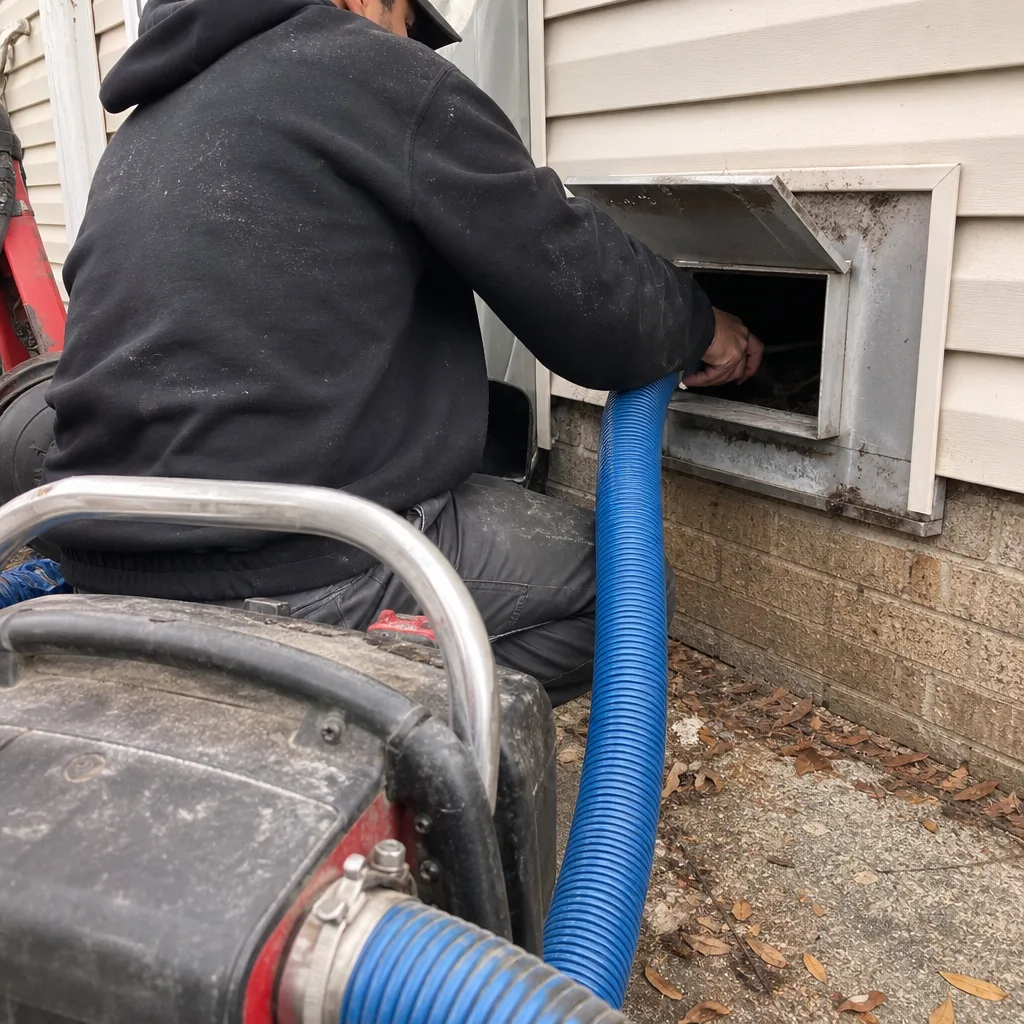 Before
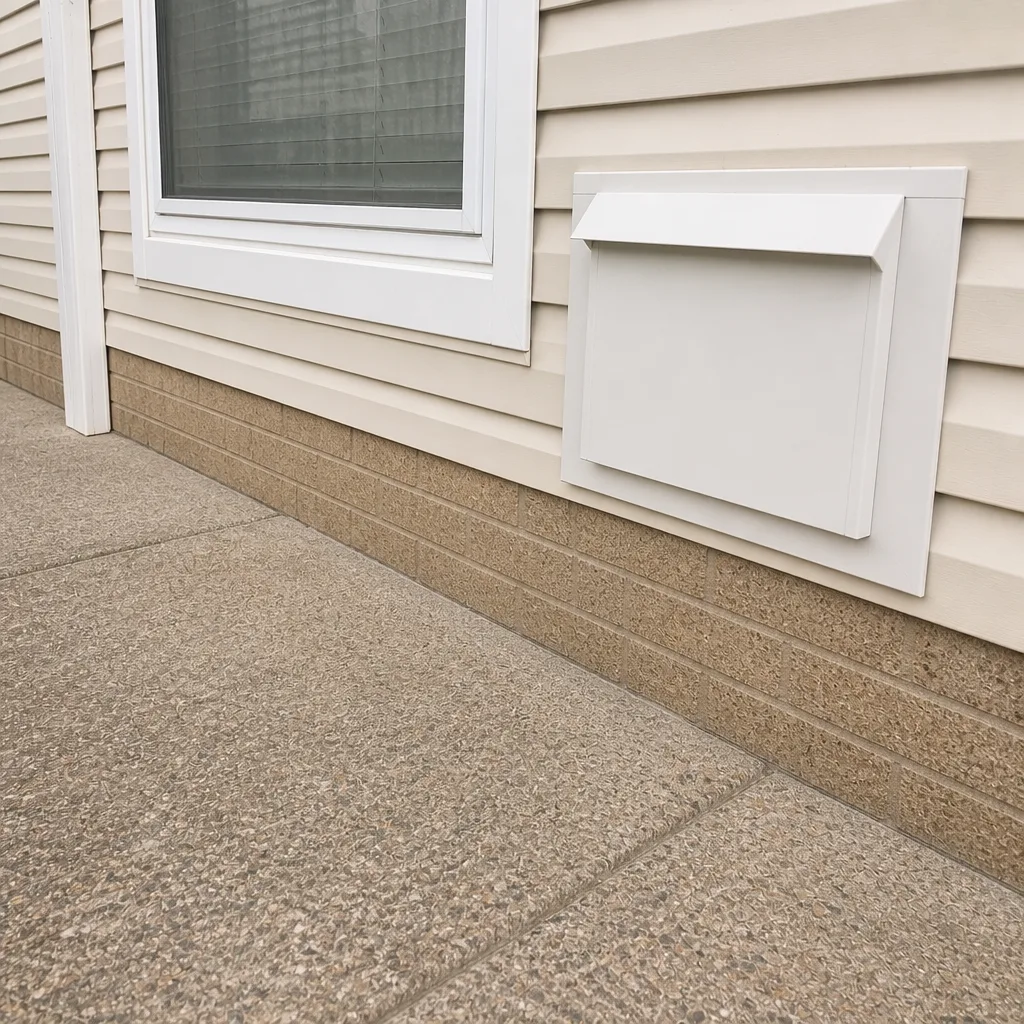 After
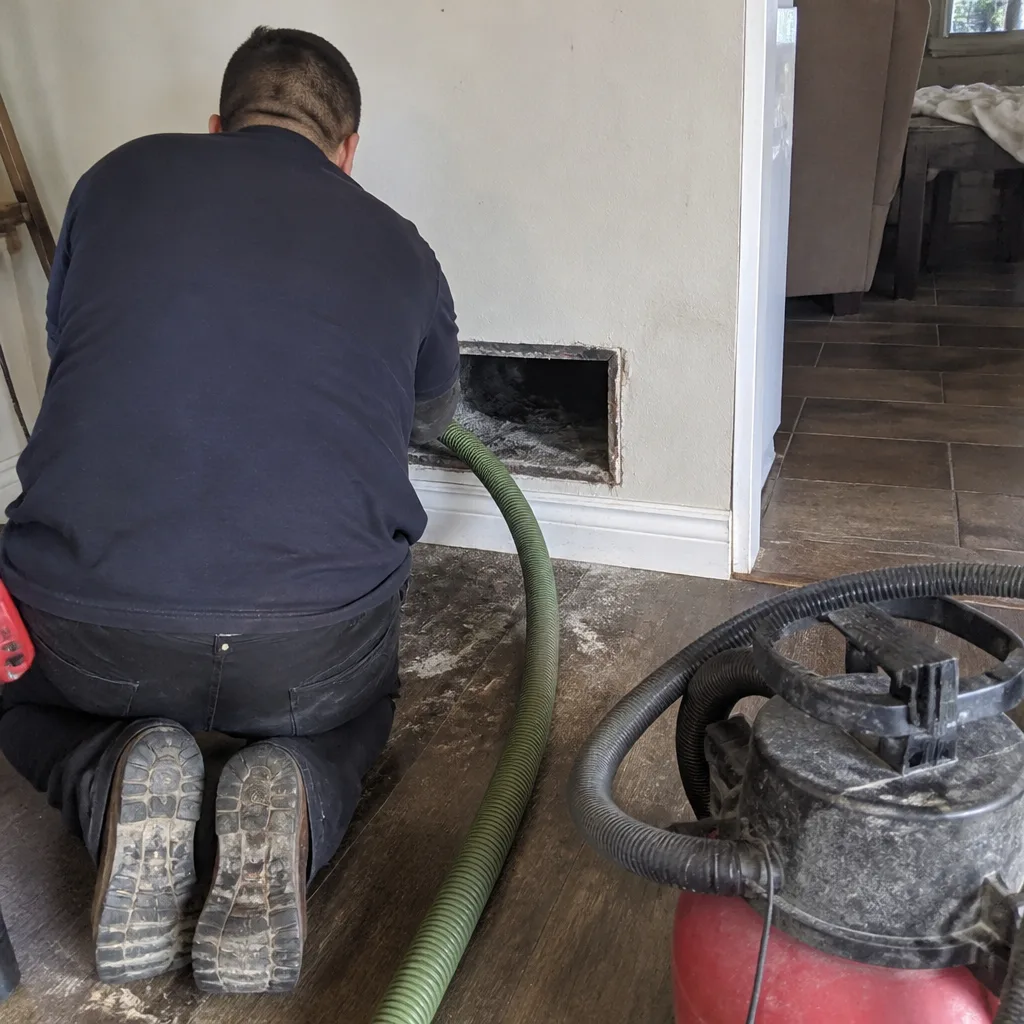 Before
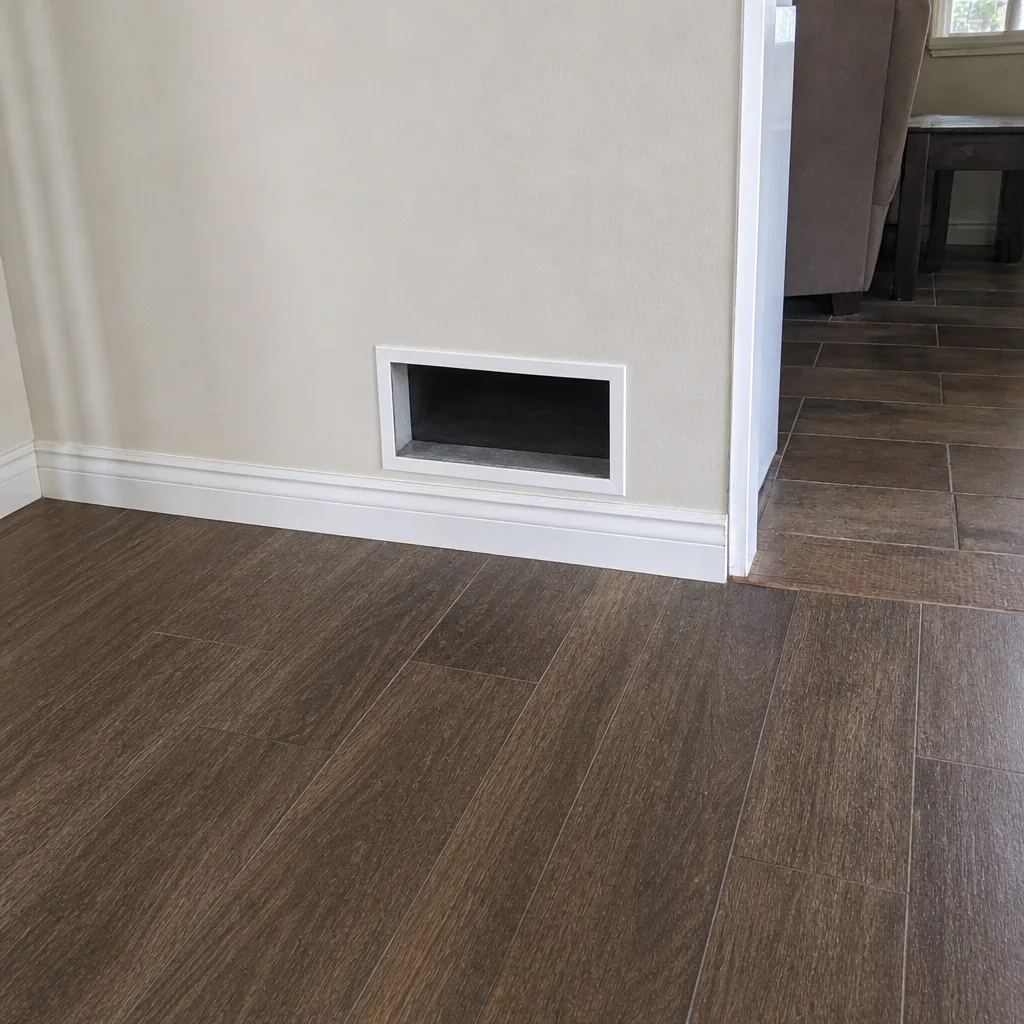 After
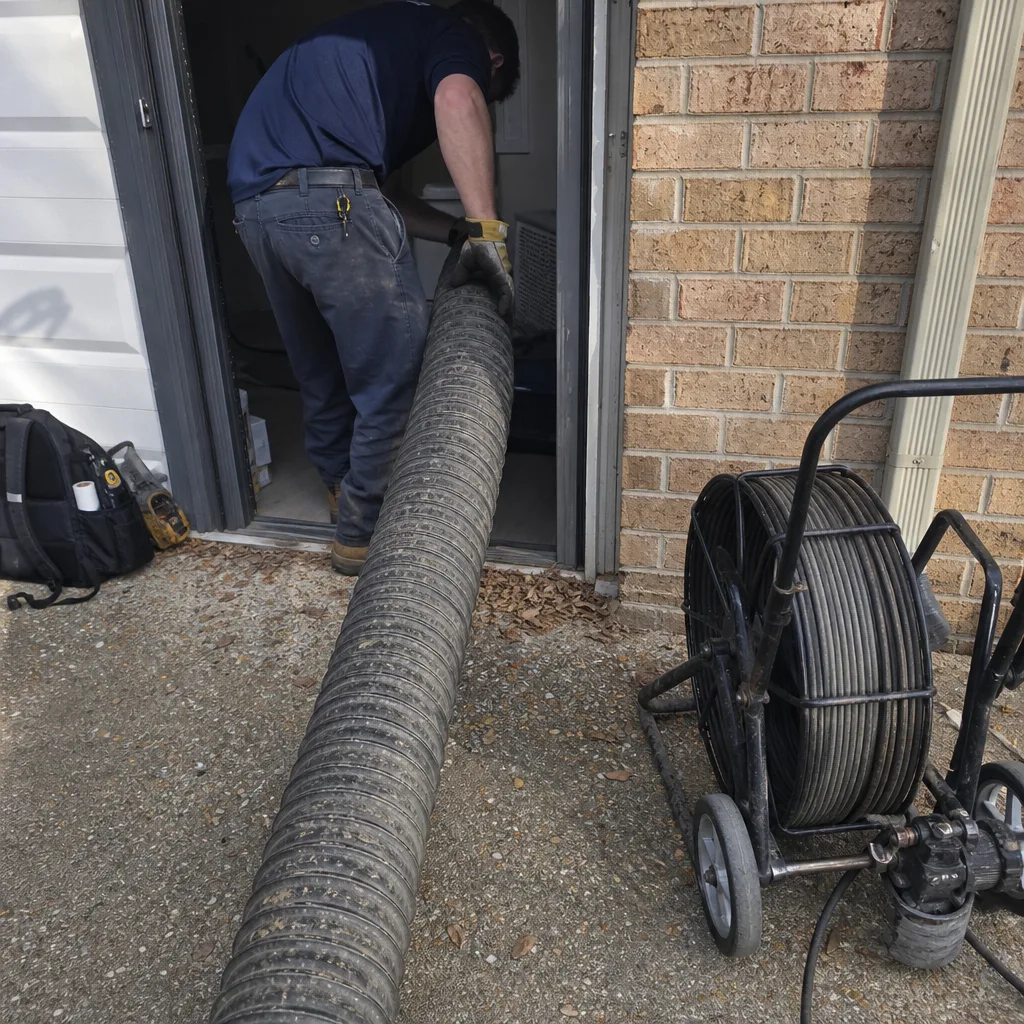 Before
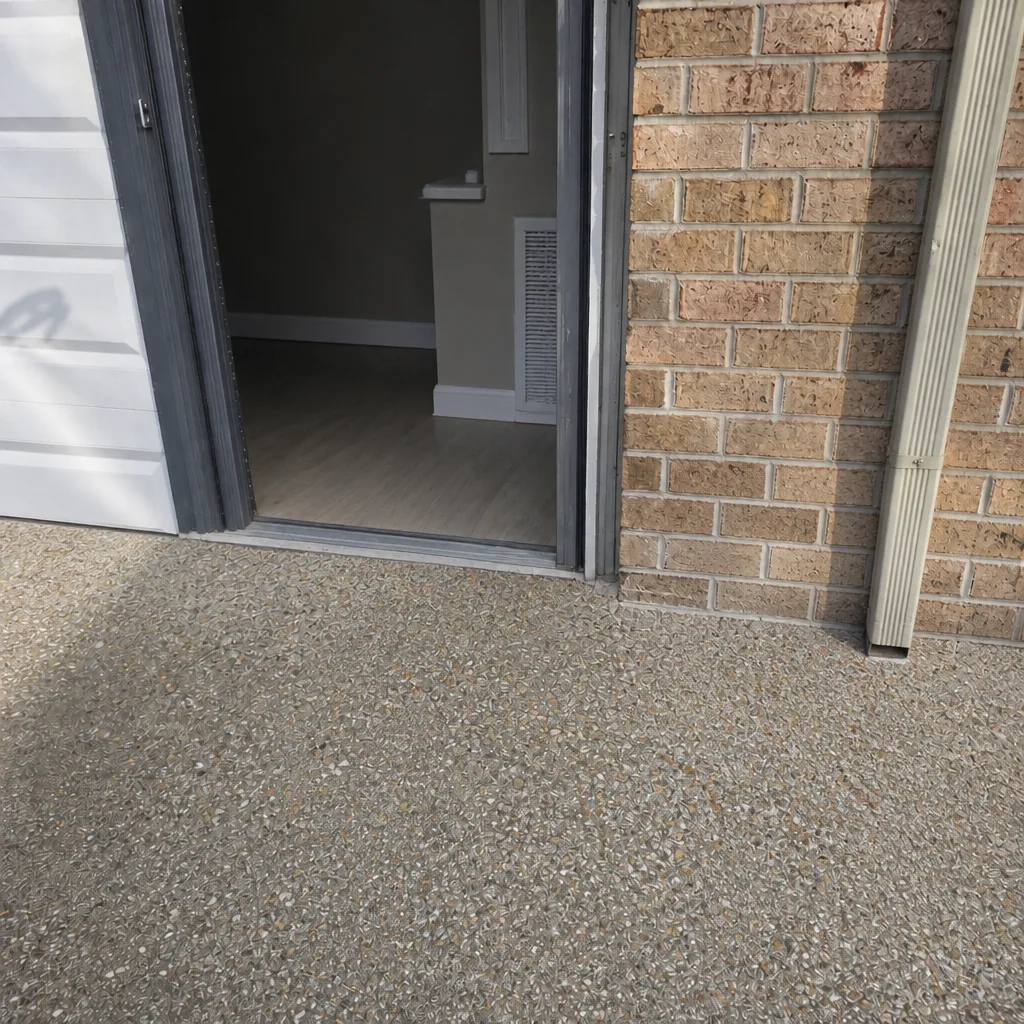 After
Frequently Asked Questions
Whole-system air duct cleaning in Antioch typically runs in the range of a few hundred dollars to under a thousand, depending on square footage, number of duct runs, and accessibility. The exact figure is set by a written estimate after the walkthrough, not quoted over the phone. Treat any quote below $150 for a whole-house job as a sign the scope won’t include real source-removal cleaning. Call (833) 508-9940 for an exact quote – estimates are free.
The cheapest quotes are usually teaser prices that get replaced by a menu of add-ons once the crew is on site, or per-vent pricing that grows with your register count. A legitimate source-removal job requires professional-grade extraction equipment, a contact brush system, and containment supplies – none of which fit into a sub-$150 price. The final cost from a cheap quote is usually higher than the honest flat-price estimate. Call (833) 508-9940 and we’ll give you a whole-system price before anything gets set up.
Ask for before-and-after photos of the same interior duct access points, taken during the visit. If the contractor can’t or won’t provide that documentation, you have no way to verify actual removal. The cameras don’t lie – ask for photos of the interior duct and the register boots. Call (833) 508-9940 to book an estimate that includes that documentation.
Most homes go several years between cleanings, and some never need one if the system is well-sealed and filtration is maintained. Homes that have just been renovated, or where the HVAC coil or fan is dirty, may need service sooner. A walkthrough usually answers the question in ten minutes. Call (833) 508-9940 for a free estimate on your specific system.
For duct cleaning specifically, the air-chip-focused NADCA credential matters more than a general HVAC license. The two cover different skill sets, and the certification you want for the cleaning portion of the work is the one that speaks directly to air system cleaning standards. Call (833) 508-9940 and ask us what certification and equipment we’re using before you book.
Yes – a stiff brush or excessive air pressure run through flex duct can tear the inner liner, and the damage may not be visible from the register. This is one of the strongest reasons to ask the contractor what brush system they’re running before you approve the job. Rotobrush contact technology is designed to scrub at a pressure the flex liner can handle. Call (833) 508-9940 and we’ll walk through the specific equipment we use on flex duct.
The Bottom Line
Hiring a duct cleaner in Antioch comes down to three questions about equipment, one honest answer about price, and written documentation of the work. Ask about the vacuum’s airflow rating, the brush system type, and whether the team uses negative pressure containment. Insist on a whole-system estimate before the crew arrives, not a per-vent price. Require before-and-after photos and a contract that names what happens if mold or damaged duct sections turn up. Skip those steps and the wrong contractor can damage the very system you’re paying to protect. Our technicians have up to 13 years of experience, and we work with Rotobrush, Nikro, and Abatement Technologies equipment on every full-system job – call (833) 508-9940 for a free estimate at your Antioch home.
Written by the team at Antioch Air Duct Cleaning Pros.