
Last updated November 22, 2026
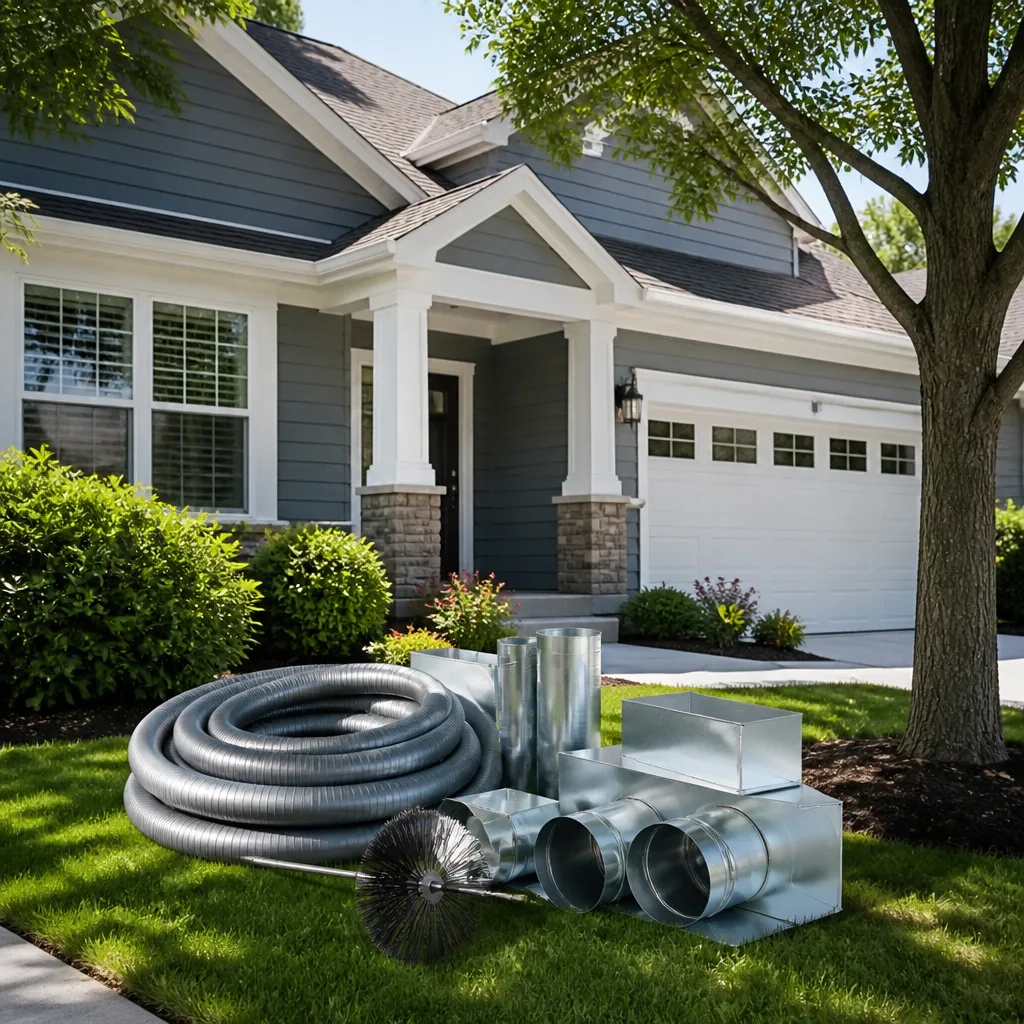 Whole-home duct cleaning
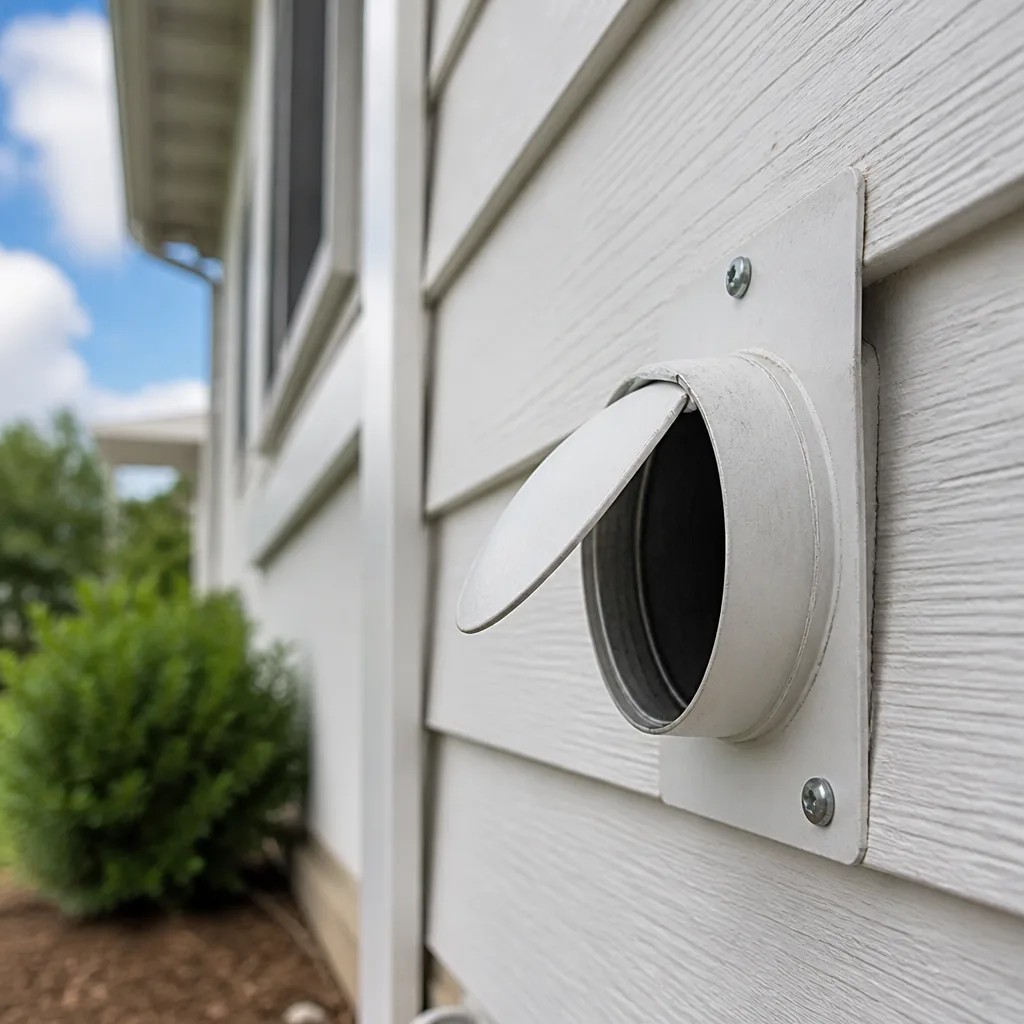 Dryer vent cleaning
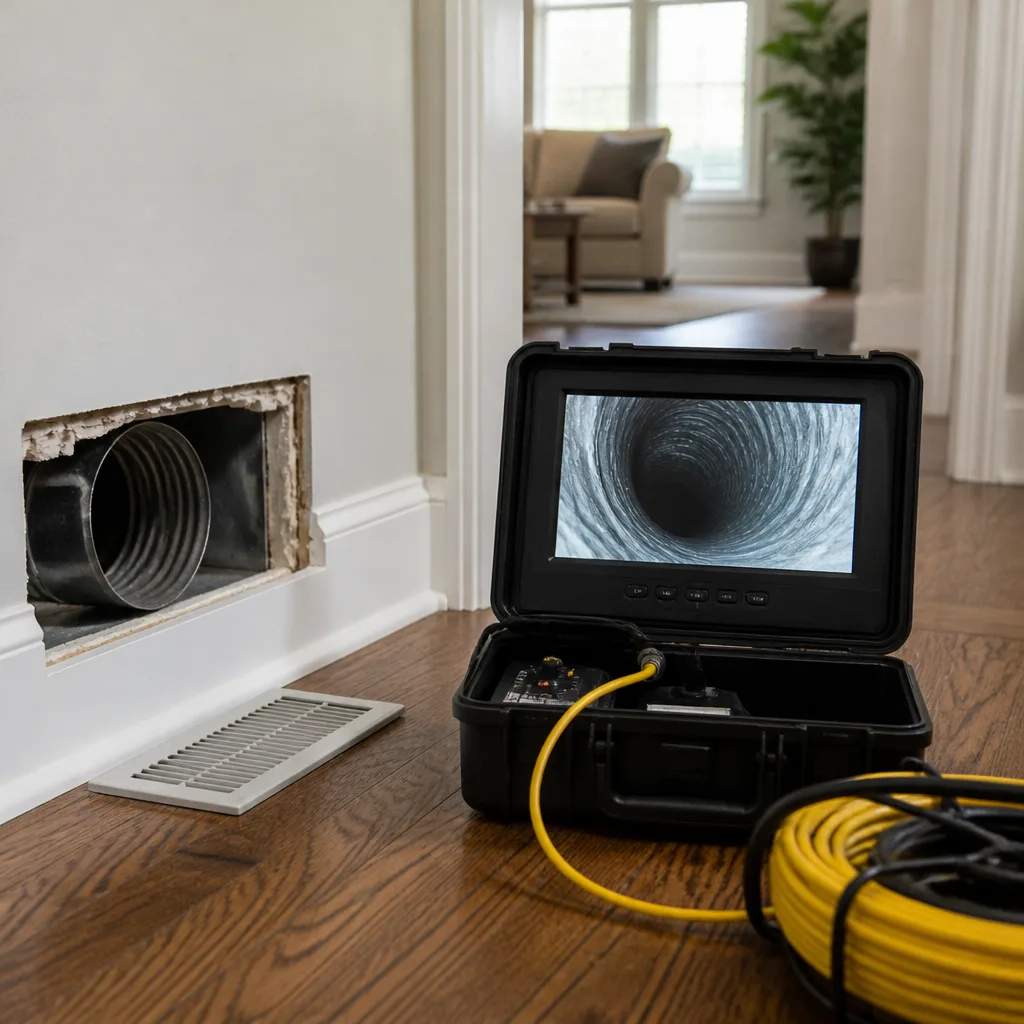 Camera inspection
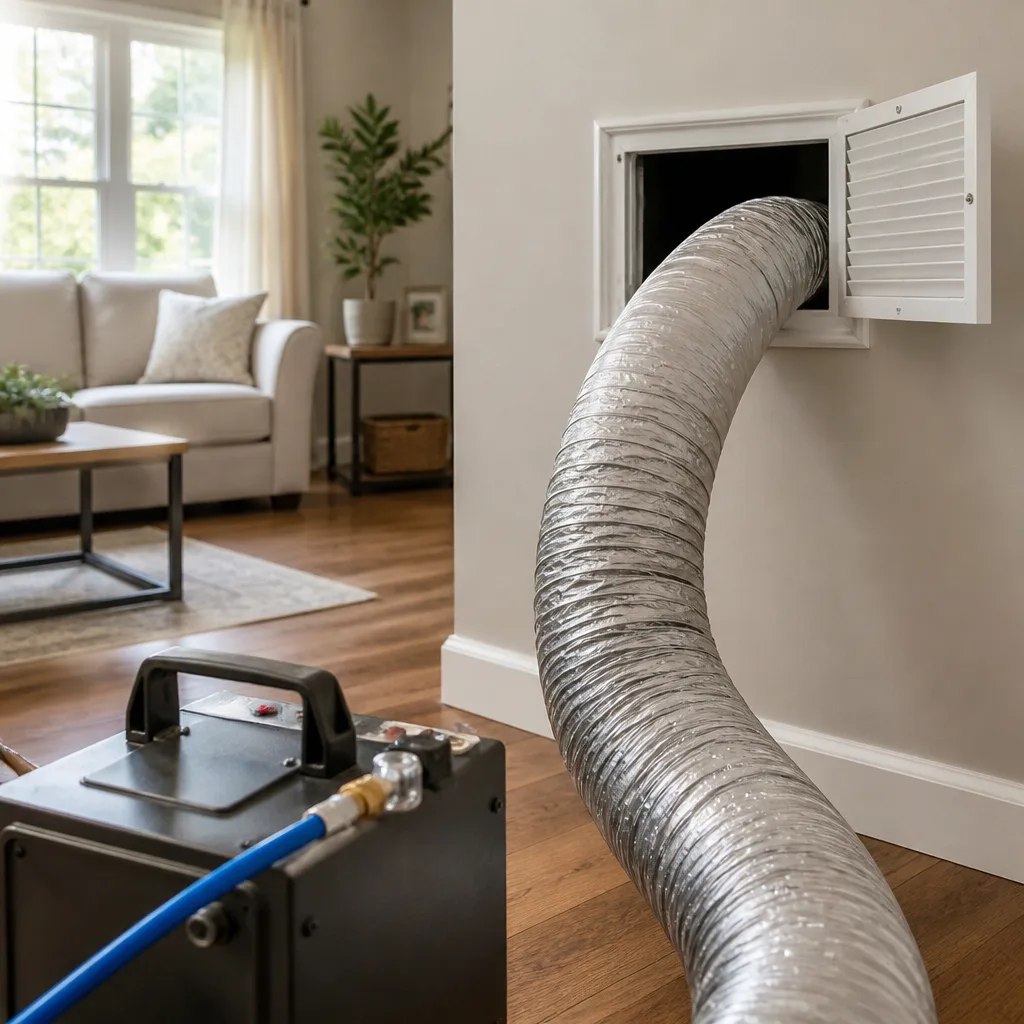 Sanitizing & deodorizing
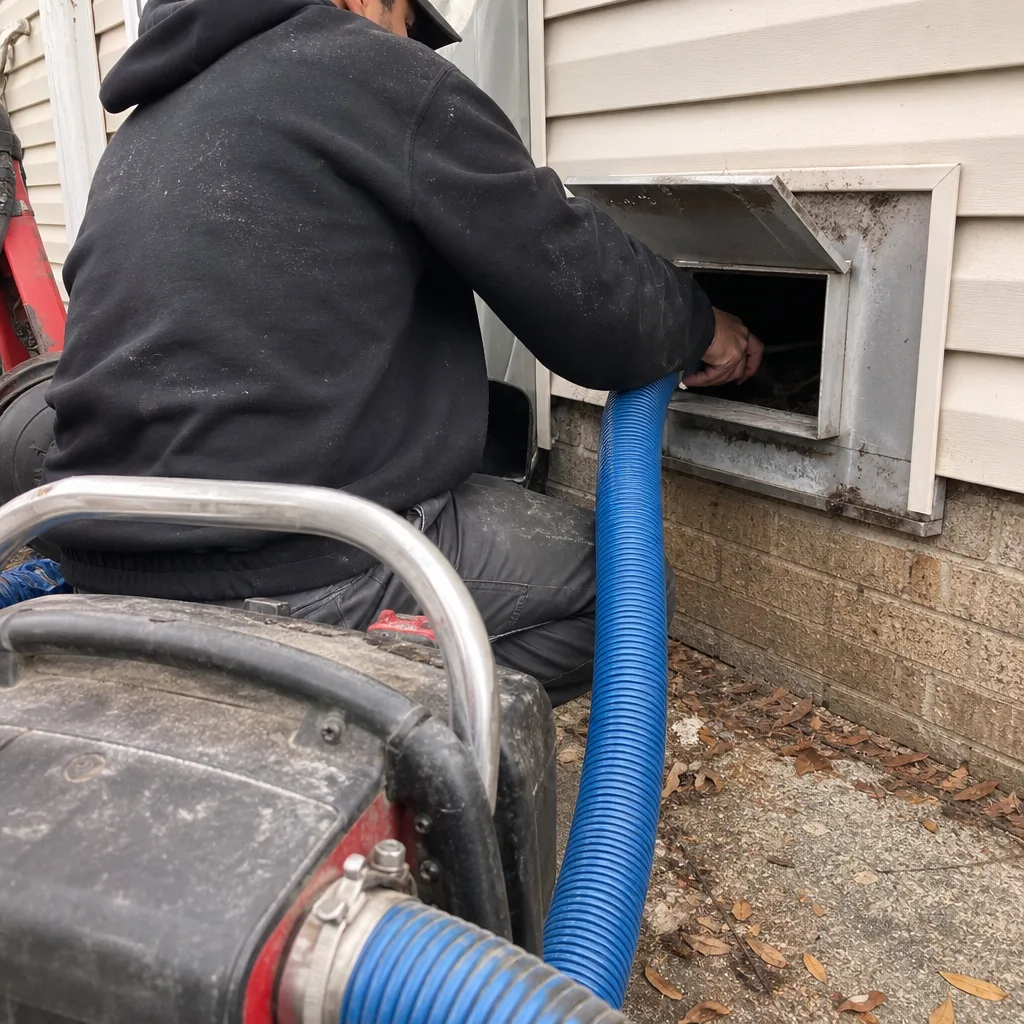
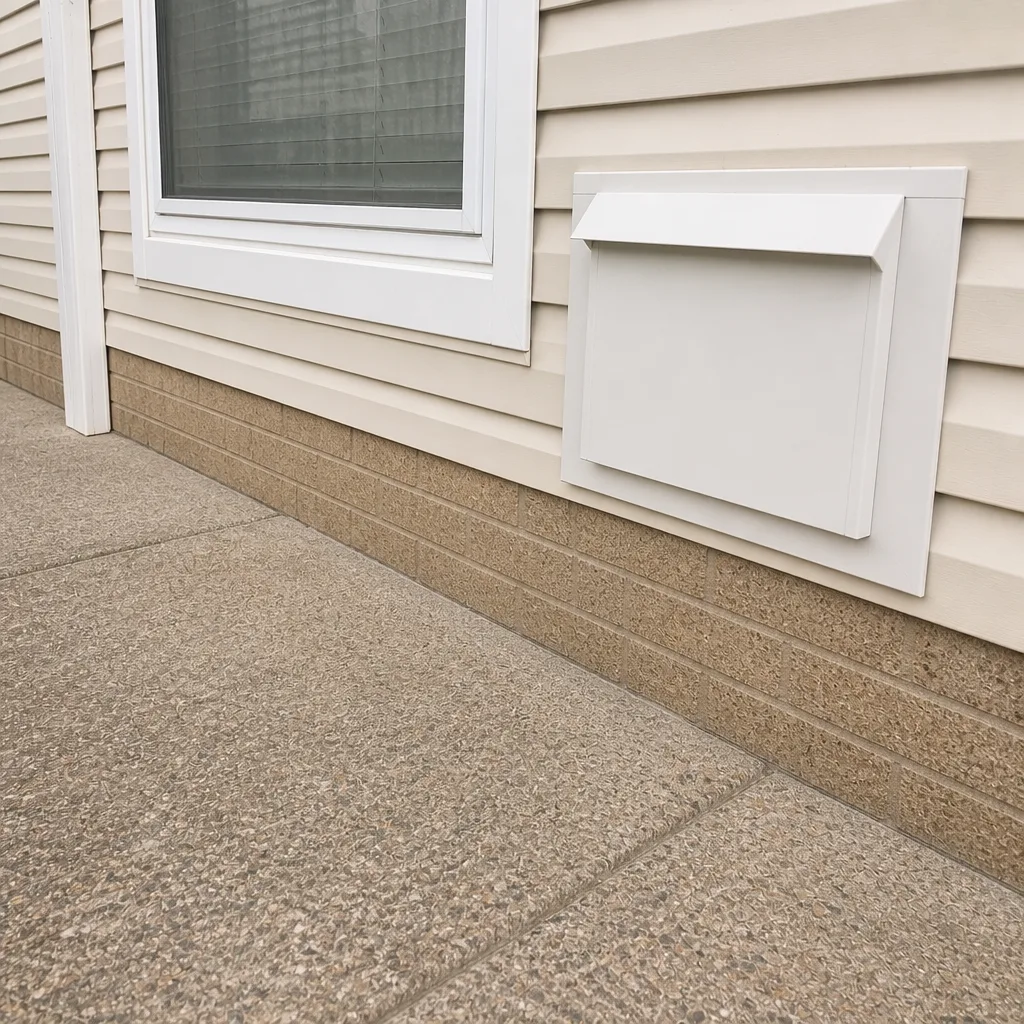
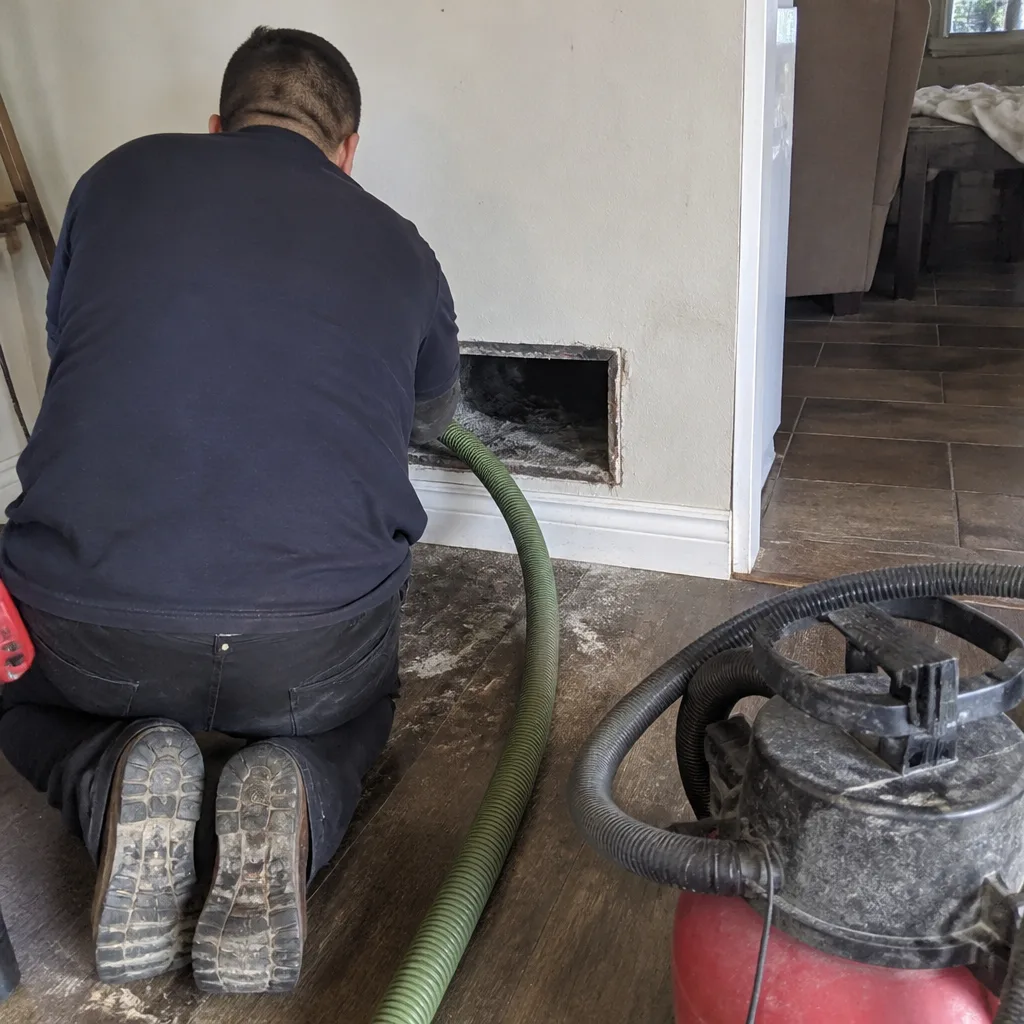
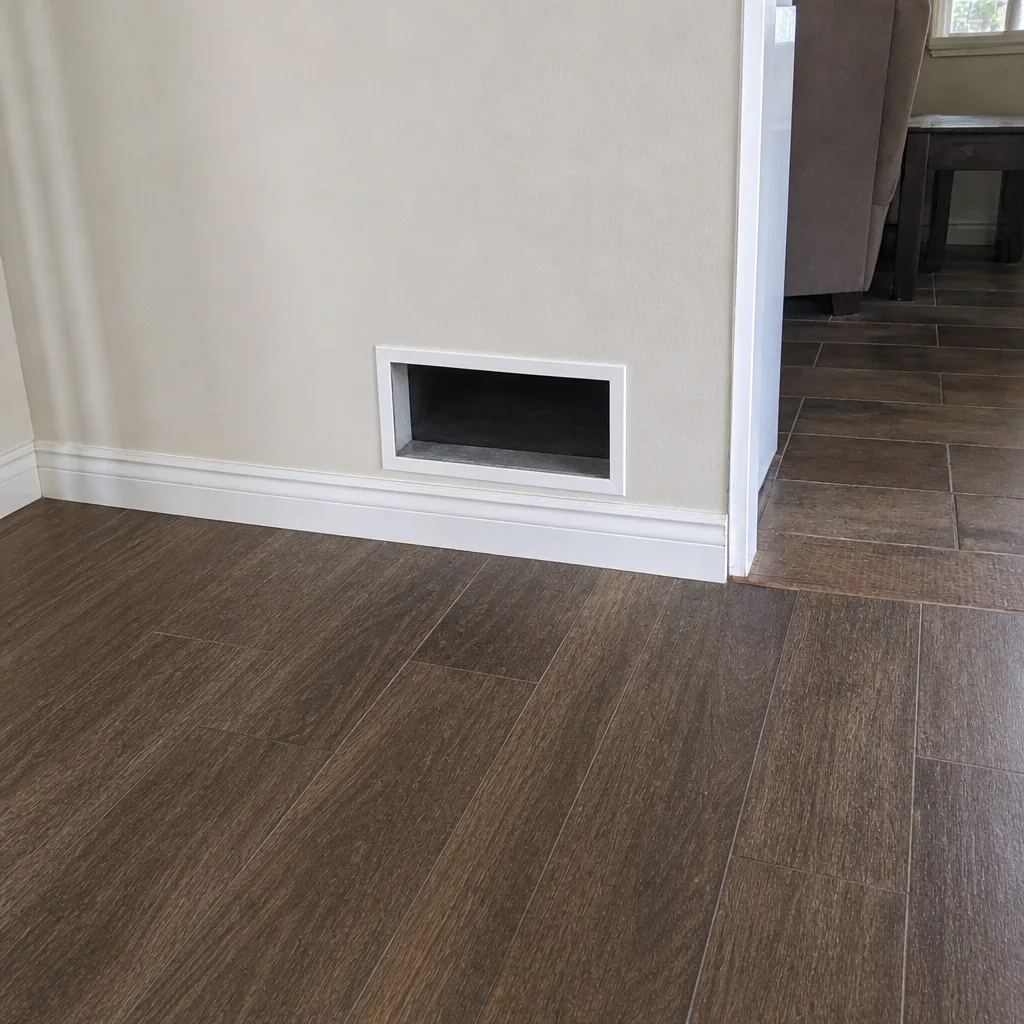
Whole-system duct and dryer vent check with before-and-after photos - you see exactly what came out of your vents
That "$99 whole-house special" is a bait ad - the real number appears once they are in your hallway, or the "clean" is a shop-vac at the register. We photograph the inside of your ducts before and after instead.
Air Duct Cleaning Permits, Codes & Inspections in Antioch, TN: What You Need to Know
Here’s the part most homeowners get wrong: nobody thinks of duct cleaning as construction work, so nobody thinks to ask about permits before the van pulls into the driveway. That’s a reasonable assumption, and for a straight cleaning it’s usually correct. But a cleaning is also an inspection by another name, and when it turns up crushed flex duct in an attic or a trunk line pulling apart at a joint, the job changes shape. Tennessee’s residential mechanical code has real, specific standards for how ducts must be built and supported, and repairs that fall short of those standards can surface years later at a home inspection. This guide covers where cleaning stops and permitted mechanical work begins, what the code actually says about duct construction, how sanitizing products are regulated, and what Antioch homeowners should keep on file. You’ll finish knowing which questions to ask before anyone touches your ductwork.
Quick Answer
Air duct cleaning by itself generally does not require a permit in Antioch or anywhere in Davidson County. Duct replacement, major modification, or new duct runs usually do require a permit through Metro Nashville’s codes department, because that work falls under the Tennessee Mechanical Code. Simple sealing with mastic or foil tape typically does not trigger a permit, but it does need to meet code standards for materials and support. When in doubt, ask your contractor to state in writing whether the work is permitted, and confirm the answer with the local codes office before work starts.
Styles & brands we work with
- Whole-home duct cleaning
- Dryer vent cleaning
- Camera inspection
- Sanitizing & deodorizing
Table of Contents
- Cleaning vs. Mechanical Work: Where the Line Sits
- When Does Duct Work Trigger a Permit in Antioch?
- Tennessee Mechanical Code M1601: What It Means for Older Antioch Homes
- Duct Sealing vs. Duct Replacement: The Permit Difference
- Sanitizing Agents and EPA FIFRA: What Documentation to Ask For
- What a Duct Inspection Actually Covers
- Resale Disclosure: Keeping Your Duct History on File
- Common Mistakes to Avoid
Cleaning vs. Mechanical Work: Where the Line Sits
The clearest way to think about it is this: cleaning removes what’s inside the duct. Mechanical work changes the duct itself. One is maintenance, the other is construction, and Tennessee treats them differently.
Cleaning covers the inside surfaces of the duct system. Technicians run contact cleaning equipment through supply and return runs, extract the loosened debris with high-volume vacuum equipment, and put the system back together. Nothing about the duct’s shape, routing, or connections changes. That’s why a straight cleaning generally sits outside the permit process.
Mechanical work means the duct system itself is being altered. That includes:
- Replacing a run of flex duct that has torn, collapsed, or been chewed through
- Adding a new supply or return branch to serve a renovated room
- Rerouting a trunk line to clear a finished ceiling or a new beam
- Changing the size of a duct to correct a static pressure problem
- Replacing a section of ductboard or hard pipe that has failed
Each of those changes the system’s design, and each one is the kind of work a mechanical permit exists to track. In our experience, the confusion comes from how these jobs arrive. A homeowner books an air duct cleaning because the house feels dusty or the vents look dark, and the cleaning uncovers a collapsed run in the attic. Now there’s a repair to talk about, and the conversation about permits should happen right there, before anyone starts bending metal.
Around Antioch, this comes up often in the older ranch and split-level neighborhoods where the duct system has been through a few HVAC replacements. A system that’s been reconnected two or three times over the years tends to have joints that were taped and re-taped, and flex runs that sag where the original strapping gave out. Cleaning finds those. What happens next depends on whether the fix is a seal or a replacement.
When Does Duct Work Trigger a Permit in Antioch?
Antioch sits inside Davidson County, so residential mechanical permits run through Metro Nashville’s codes department rather than a separate Antioch office. The general rule: work that alters the mechanical system requires a permit and an inspection. Routine maintenance and cleaning do not.
Here’s the practical breakdown of what usually does and doesn’t trigger a permit:
- Typically no permit: cleaning and debris removal, sealing existing joints with mastic or approved tape, replacing a grille or register, replacing a filter, minor insulation repair on an accessible duct
- Typically requires a permit: replacing a duct run, adding or removing a supply or return, resizing ductwork, replacing a substantial section of trunk line, any work tied to a new HVAC installation or a system changeout
A few things worth knowing before you call the codes office:
- Ask specifically whether your project is classified as a repair or an alteration. The answer often decides the permit question.
- Confirm who pulls the permit. In most residential mechanical work, the licensed contractor pulls it, not the homeowner.
- Ask what inspections are required and at what stage, so the work isn’t closed up before it’s seen.
- Get the answer in writing or note who you spoke with and when.
We don’t issue permits and we don’t speak for the codes department. What we can tell you is that the question is worth asking before work begins rather than after. A homeowner who asks “is this permitted?” during the estimate gets a straight answer. A homeowner who asks after the drywall goes back up is in a harder spot.
Tennessee Mechanical Code M1601: What It Means for Older Antioch Homes
Section M1601 of the Tennessee Mechanical Code governs duct construction. It’s the section that sets the standards for materials, support, sealing, and installation. Most homeowners have never read it, and most don’t need to. But if you own an older Antioch home and you’re about to spend money on duct repair, the standards behind M1601 are the reason a proper repair costs what it costs.
The broad themes M1601 addresses:
- Duct materials must be approved for the application, and flexible duct must be installed per the manufacturer’s listing
- Ducts must be supported at intervals that prevent sagging, which is specified rather than left to judgment
- Joints and seams must be sealed to limit leakage
- Ducts routed through unconditioned space need insulation to control condensation and energy loss
- Flexible duct must be installed with limited sag and without sharp bends that restrict airflow
That last point matters most in Antioch’s older housing stock. Much of the housing here went up in the decades when flex duct became the default for attic runs, and flex duct fails in predictable ways. It sags between straps. It gets crushed where someone stepped on it in the attic. It separates at the collar where it meets the plenum. Squirrels and rodents find it. And over time, the inner liner can delaminate, which means the air moving through your system is passing over torn material.
None of that is a code violation on its own, because the code governs installation, not deterioration. But it explains why a repair has to be done to a standard. A run replaced with undersized flex, no support, and a single wrap of tape looks fine from the attic stairs and fails the intent of M1601. If the work is permitted, an inspector will look at exactly those details.
Our technicians have up to 13 years of experience with these systems, and the pattern is consistent: the duct problems that matter most aren’t the dramatic ones, they’re the quiet ones. A sagging run over a garage ceiling. A return chase that was never properly sealed. Those are the ones that show up in a home inspection report years later.
Duct Sealing vs. Duct Replacement: The Permit Difference
This is the distinction Antioch homeowners ask about most, and it’s worth spelling out clearly because the two jobs look similar on an invoice and behave very differently at the permit desk.
Sealing means closing leaks at existing joints, seams, and connections. The duct stays where it is. The work is done with mastic, approved foil tape, or aerosolized sealant applied inside the system. Because nothing about the duct’s design, routing, or size changes, sealing typically does not require a mechanical permit. It’s still regulated by material standards. The tape has to be the right tape, the mastic has to be applied correctly, and the joint has to be clean enough for either to hold.
Replacement or modification means the duct itself changes. A run comes out and a new one goes in. A trunk gets rerouted. A branch is added or capped. That’s alteration work, and in Davidson County it generally means a mechanical permit and an inspection.
Why the distinction matters:
- Cost and scope. Sealing is typically a smaller, faster job. Replacement involves materials, labor, and code compliance.
- Documentation. A permitted replacement leaves a record with the county. Sealing leaves whatever your contractor documents.
- Resale. A buyer’s inspector who finds new ductwork will want to know it was permitted. If it was, that’s a one-line answer.
- Warranty. Unpermitted alterations can complicate coverage questions later, on the HVAC equipment and on the home.
We handle duct repair and sealing as an in-house service, which means the same people who cleaned the system can tell you honestly which side of the line your repair falls on. Sometimes a system that looks like it needs replacement just needs proper sealing at six or eight joints. Sometimes the opposite is true. Getting that call right saves real money, and it starts with an honest assessment rather than a sales target.
Sanitizing Agents and EPA FIFRA: What Documentation to Ask For
If anyone is going to apply a chemical product inside your ductwork, the product is regulated. Sanitizers, disinfectants, and antimicrobial coatings used in HVAC systems fall under the Federal Insecticide, Fungicide, and Rodenticide Act, usually called FIFRA. That’s the federal law governing how pesticides are registered, labeled, and applied.
What this means in plain terms for a homeowner:
- Any product applied inside your ducts should have an EPA registration number on its label
- The label specifies where and how the product may be used, and those directions are legally binding
- A contractor applying a registered product should be able to show you the label and the safety data sheet on request
- No product should be applied in a way that contradicts its label, including application method and concentration
This is a reasonable thing to ask about, and a legitimate contractor won’t be bothered by the question. Ask what product is going in, ask to see the label, and ask why that product is the right one for what was found in your system. If the answer is vague, that’s your answer.
One more note on scope. Sanitizing is not a substitute for cleaning. Applying a product to a duct system that still holds debris is putting a treatment on top of a problem. The sequence that makes sense is mechanical cleaning first with proper extraction equipment, then sanitizing where it’s appropriate, then addressing any sealing or repair the cleaning uncovered. We work with Abatement Technologies filtration equipment on the contaminant-removal side, which is the same grade of equipment used in professional remediation work, and we know Honeywell and Aprilaire filtration products well enough to talk through whether an upgrade makes sense for your system after cleaning.
What a Duct Inspection Actually Covers
A duct inspection isn’t one thing. It depends on who’s doing it and why. Here’s how the three common versions differ, because homeowners often expect one and get another.
- Cleaning-based inspection. During a cleaning, technicians see the inside of runs that are invisible from the house. They look for torn liner, disconnected joints, crushed sections, moisture, pest evidence, and debris type. This is the most common way duct problems get found, because it’s the only time anyone is looking.
- Home inspection duct findings. A general home inspector reviews what’s visible and accessible, and often notes sagging flex, unsealed joints, or ductwork routed through unconditioned space. Those notes go in the report and become negotiating items.
- Permitted-work inspection. When duct repair or replacement is permitted, a county inspector reviews the work against the mechanical code before it’s closed up. This is the only version that produces an official record.
In Antioch, the pattern we see most is the first one. A homeowner books a cleaning because of dust, allergies, or a recent renovation, and the cleaning surfaces something worth fixing. That’s not a sales pitch, it’s what happens when someone actually looks inside a 25-year-old duct system. What matters is how the findings are presented. Photos of the inside of the duct, an explanation of what’s wrong and why, and a clear statement of which fixes need a permit and which don’t.
If you’re also due for system work, pairing HVAC cleaning with the duct assessment is worth considering. Coils, blower wheels, and drain pans collect the same debris the ducts do, and a system cleaned as a whole performs differently than one cleaned in pieces. Separately, if your dryer has been taking longer to dry loads, dryer vent cleaning is a fire-safety service rather than a cosmetic one, and it’s worth doing on its own schedule.
Resale Disclosure: Keeping Your Duct History on File
Duct work doesn’t usually show up on a disclosure form as its own line item, but it shows up in the inspection report, and that’s where it counts. A buyer’s inspector who finds recently replaced ductwork will ask whether it was permitted. A seller who can produce a permit and an inspection record answers that question in ten seconds. A seller who can’t is suddenly explaining.
The file worth keeping is short and simple:
- Receipts and invoices for any duct cleaning, sealing, or repair work, with dates
- Permit numbers and inspection sign-offs for any permitted mechanical work
- Before-and-after photos of your own duct system from the cleaning
- Product labels or documentation for any sanitizing or filtration product applied or installed
- HVAC equipment records, since duct and equipment work are usually connected
A folder on your phone or a scanned set in your email is enough. The point isn’t paperwork for its own sake, it’s being able to answer a straightforward question with a document instead of a memory. Before-and-after photos are especially useful here, because they show the condition of the system on a specific date, which is exactly what an inspector is trying to establish.
Common Mistakes to Avoid
- Assuming cleaning never touches code. The cleaning itself usually doesn’t, but the repair it uncovers might. Ask about permits before the repair starts, not after.
- Letting a contractor decide permit questions for you. A contractor who says “you don’t need a permit” without asking what the work involves hasn’t answered the question. Ask what happens if the inspector disagrees.
- Accepting a sanitizing treatment without asking what’s being applied. Any product applied inside your ducts should have an EPA registration number and a label you can see. A vague answer about “an antimicrobial” isn’t documentation.
- Skipping photos. If you can’t see inside the duct before and after, you can’t verify the work. Before-and-after photos of your own system cost nothing and settle arguments later.
- Letting a repair happen without documentation because it was “small.” Small repairs are exactly the ones that go unrecorded and then look mysterious in a home inspection report five years on.
- Replacing ductwork without addressing why it failed. New flex installed to the same undersized, unsupported pattern will fail the same way. The cause matters more than the material.
- Treating a home inspection duct note as a negotiation tactic only. Some of those notes describe real airflow and efficiency problems. Fixing them is worth doing whether or not you’re selling.
See the difference
 Before
 After
 Before
 After
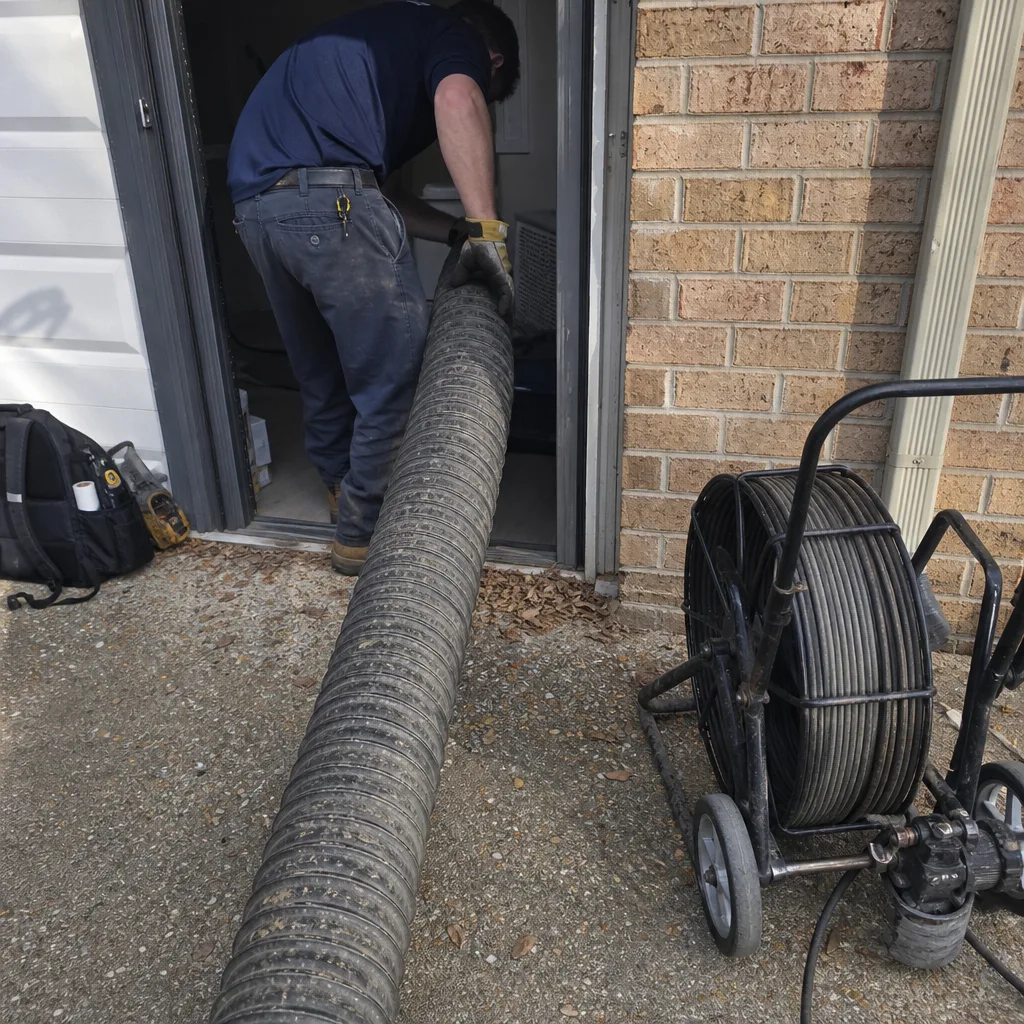 Before
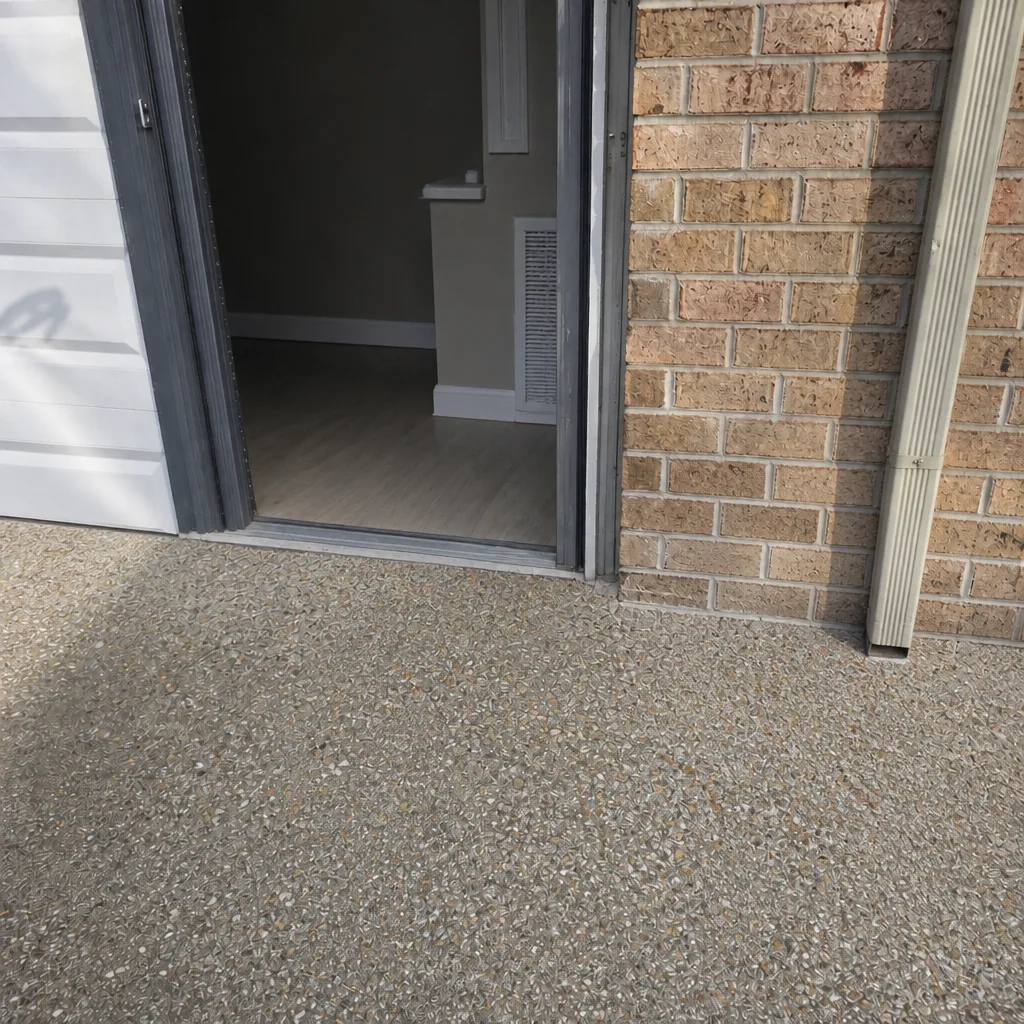 After
When to Call a Professional
Call when you can see a problem and when you can’t. Visible sagging flex in the attic, ducts that have separated at a joint, evidence of rodents in the ductwork, or vents that whistle or barely move air are all reasons to get someone out. So is a house that feels dusty within a day of cleaning, or allergy symptoms that get worse when the system runs. If you’ve recently bought a home and don’t know when the ducts were last cleaned, an assessment is a reasonable first step. And if a home inspection flagged duct issues, get a real opinion on whether it’s a sealing job or a replacement, because the permit implications differ.
Antioch Air Duct Cleaning Pros offers free estimates in Antioch. Call (833) 508-9940. We answer 24/7. Fast dispatch from 7am to 7pm, Sunday through Friday. One flat price per system, agreed before work starts, with before-and-after photos of your own ducts so you can see what changed.
Frequently Asked Questions
No, a standard air duct cleaning does not require a permit in Antioch or anywhere in Davidson County, because cleaning doesn’t alter the mechanical system. Duct replacement, new duct runs, resizing, or rerouting generally do require a mechanical permit through Metro Nashville’s codes department. If a cleaning uncovers damage that needs repair, ask your contractor whether that specific repair is permitted before work begins. Call (833) 508-9940 for an assessment – estimates are free.
Duct sealing with mastic or approved foil tape typically does not require a permit, since the duct stays in place and its design doesn’t change. The materials and application still need to meet code standards under the mechanical code, so a proper seal is about doing it right, not about paperwork. Duct replacement is the opposite case and usually does require a permit. If you’re unsure which side of the line your job falls on, call (833) 508-9940 and we’ll walk through it.
FIFRA is the federal law that governs how pesticide products, including sanitizers and antimicrobials used inside HVAC systems, are registered, labeled, and applied. Any product applied in your ductwork should carry an EPA registration number, and the label directions are legally binding on the applicator. Ask to see the label and the safety data sheet before any product goes in. If a contractor can’t produce documentation, that tells you something. Call (833) 508-9940 for a free estimate.
It can, yes. A buyer’s home inspector who finds recently replaced or altered ductwork will typically ask whether it was permitted, and a permit with an inspection record answers that question cleanly. Without one, the seller ends up explaining, and buyers tend to treat unexplained mechanical work as a negotiating item. Keep invoices, permit numbers, and before-and-after photos on file. Call (833) 508-9940 if you need an assessment before listing.
Before-and-after photos of your own duct system, taken inside the runs, are the simplest verification and every job should come with them. In our case the same people clean and inspect, so the photos reflect the work that was done rather than a generic stock image. Ask for the photos before the technician leaves, and keep them with your home records. Call (833) 508-9940 for an exact quote – estimates are free.
Usually because they’re priced per vent rather than per system, and the low figure covers a surface pass rather than full contact cleaning with proper extraction. A whole-system job involves equipment that scrubs duct surfaces and extracts the loosened debris at high volume, which costs more to run than a vacuum and a hose. One flat price per system, agreed before work starts, is the arrangement that avoids surprises. Call (833) 508-9940 for a free estimate.
The Bottom Line
Cleaning your ducts in Antioch is maintenance, and maintenance doesn’t need a permit. The moment the work changes the duct system itself, whether that’s a replacement run, a new branch, or a rerouted trunk, you’re into permitted mechanical work under the Tennessee Mechanical Code, and Davidson County is the office that tracks it. Sealing usually sits on the maintenance side, but it still has to meet material and support standards. Sanitizing products are regulated under FIFRA, so ask for the label. And keep your records, including before-and-after photos, because the next person who looks inside your ducts may be a buyer’s inspector.
If you want a straight read on your own system, Antioch Air Duct Cleaning Pros offers free estimates in Antioch. Call (833) 508-9940. We answer 24/7. Fast dispatch from 7am to 7pm, Sunday through Friday.
Written by the team at Antioch Air Duct Cleaning Pros.